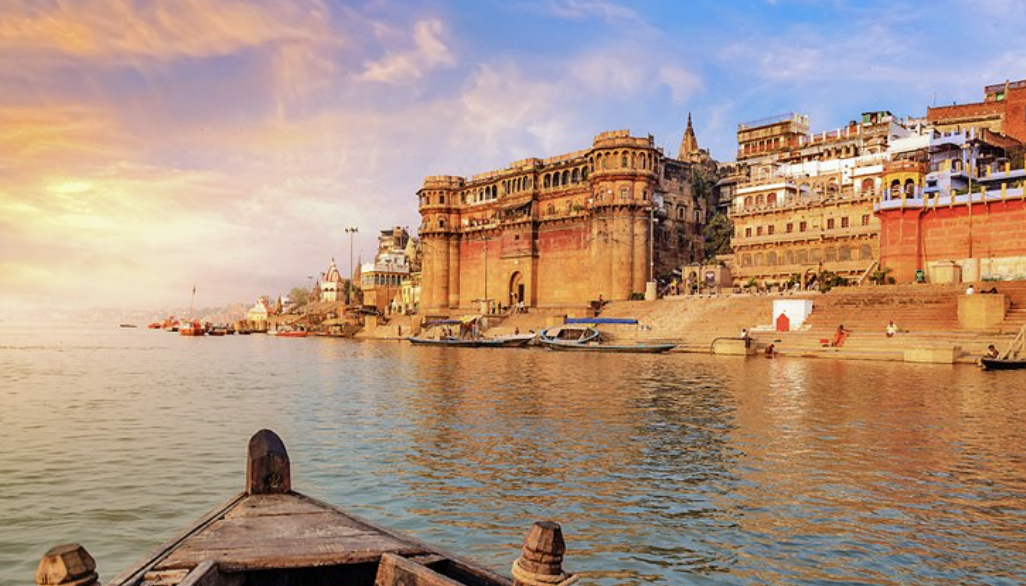
Few places in the world carry the spiritual energy and timeless charm of Varanasi — one of the oldest continuously inhabited cities on Earth. Known as Kashi in ancient scriptures, this sacred city on the banks of the River Ganges is where life, death, and divinity meet in perfect rhythm.
The City of Light and Liberation
Varanasi’s origins trace back over 3,000 years, making it a living museum of Indian culture. According to legend, the city was founded by Lord Shiva himself, earning it the name “The City of Light” — where souls find moksha (liberation).
Every dawn in Varanasi begins with chants, bells, and the soft glow of lamps as devotees perform Ganga Aarti — a mesmerizing ritual that honors the sacred river. As evening descends, the ghats come alive with flickering diyas and the scent of incense, creating a spectacle that feels both ancient and eternal.
A Spiritual and Cultural Heartbeat
With over 80 ghats, each with its own story, Varanasi is where pilgrims bathe to wash away sins, students study Sanskrit and philosophy, and sadhus meditate in silence. The Kashi Vishwanath Temple, dedicated to Lord Shiva, is the spiritual epicenter of the city, attracting millions every year.
Varanasi is also a cradle of music, art, and literature — the birthplace of classical maestros like Pandit Ravi Shankarand the poetic inspiration of Tulsidas and Kabir.
The Circle of Life
Perhaps what makes Varanasi truly unique is its honest embrace of life and death. The Manikarnika Ghat — where cremations occur day and night — reminds visitors that in this sacred city, death isn’t an end, but a passage to liberation.
Conclusion
Varanasi isn’t just a city — it’s an experience that transcends time. It’s India in its purest form — raw, spiritual, and eternal — where every flame on the river tells a story of faith that has burned for millennia.